
Your website is usually the first real impression someone gets of your business, and often the deciding one. Before a prospect calls, emails, or walks in, they look you up. What they find in those first few seconds, how the site looks, how fast it loads, whether it answers their question, quietly shapes whether they trust you enough to go further.
That is why web design is not decoration. A good website is a working part of your business, and a weak one costs you customers you never even know you lost. Here is what good web design actually does, and why it is worth taking seriously.
A website is a tool, not a brochure
A lot of businesses still treat their site like a digital flyer: put the logo up, list the services, call it done. That was fine fifteen years ago. Today your website is where people judge you, compare you, and decide whether to reach out, and it is working whether you tend to it or not.
Good design treats the site as a tool with a job: turn a visitor into a lead. Every choice, the layout, the words, the images, the buttons, points toward that. A pretty site that does not guide people toward contacting you is a missed opportunity. A plain site that makes the next step obvious often beats it.
What good web design actually delivers
When web design is done well, several things happen at once, and they add up to more customers.
Trust in the first few seconds. People decide fast whether a site feels credible. A clean, current, professional design signals that you are a business worth taking seriously. A dated or clumsy one plants doubt before you have said a word.
Speed. A site that loads slowly loses people before they see anything. Visitors leave, and Google takes note and ranks the site lower. Fast loading is one of the highest-return things a website can get right.
Clear structure. Good design makes it obvious where to go and what to do next. When people can find what they need without thinking, they stay and act. When they have to hunt, they leave.
Paths that convert. A strong site is built around the steps you want people to take, with clear calls to action and forms that are easy to complete. This is the difference between a site that gets traffic and one that gets leads.
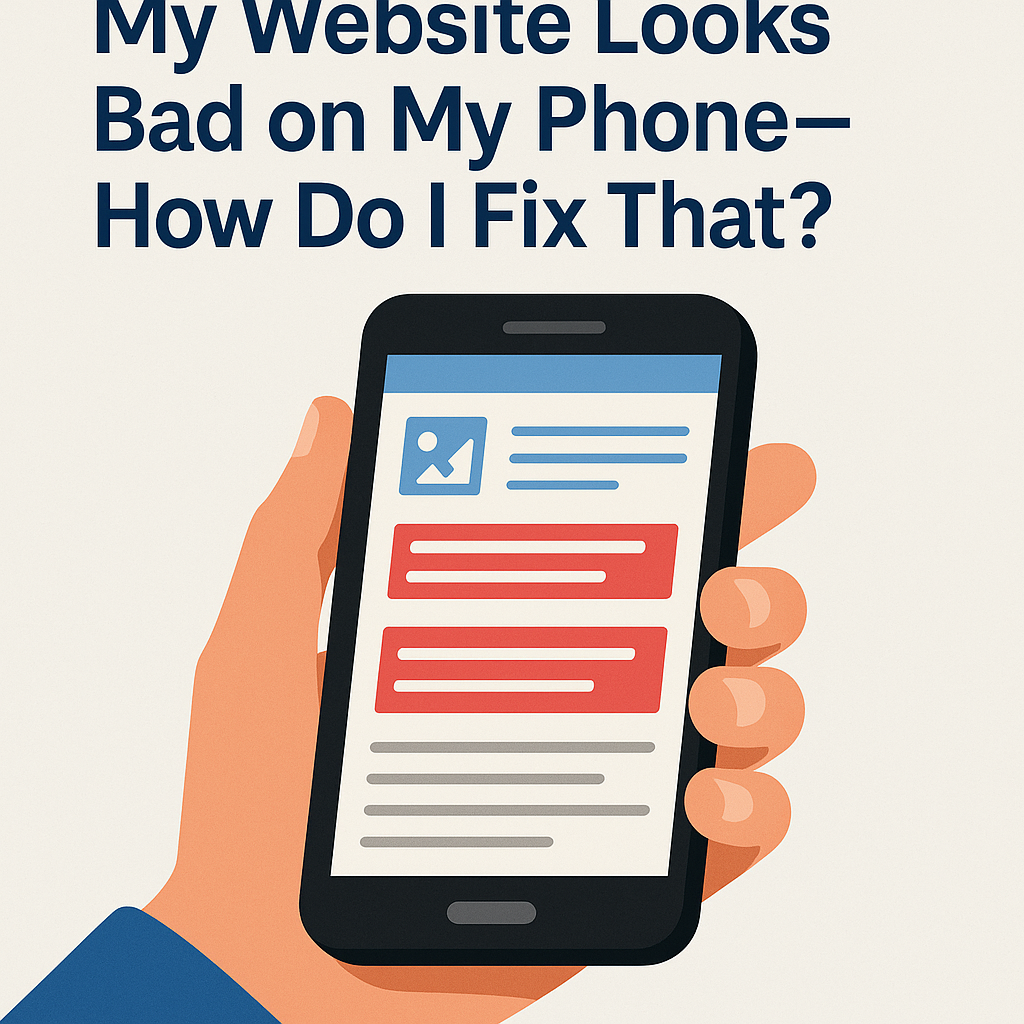
Mobile that works. Most visitors arrive on a phone. A site that is awkward to use on a small screen is turning away the majority of its audience. Good design works cleanly on every screen size, down to the phone where most of your visitors actually are.
A foundation for search. How a site is built affects whether it can rank. Clean code, sensible structure, and fast pages give your SEO something to stand on. A poorly built site fights its own search visibility.
Build it so you can actually manage it
A website is not a one-time project you finish and forget. Your business changes, your services change, and the site has to keep up. One of the most overlooked parts of good web design is building the site so the people who run it can update it without calling a developer for every headline.
This is a big reason we build Webflow-first. It keeps sites fast and secure while giving your team a clean way to make everyday edits themselves. The right platform depends on the project, and sometimes another tool fits better, but the principle holds: a site you cannot easily maintain becomes a problem the moment it ships.